
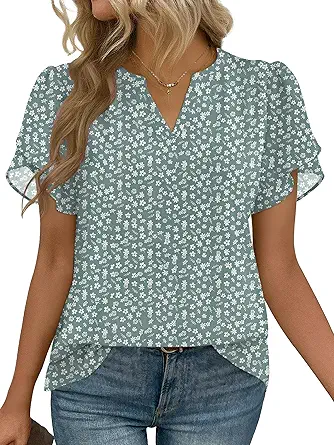
Introduction to Zeagoo Womens Dressy Casual Shirts
Zeagoo Womens Dressy Casual Shirts are a versatile wardrobe option for women who want to combine polished style with comfortable everyday dressing. Featuring details such as short sleeves, a V-neckline, and a lightweight blouse-inspired appearance, these tops can work for office outfits, casual occasions, summer gatherings, and everyday wear.
A dressy casual shirt is especially useful when you want something more refined than a basic T-shirt without choosing clothing that feels overly formal. The combination of a simple silhouette and elegant details allows these tops to transition between different settings with just a few styling changes.
The Zeagoo Womens Dressy Casual Shirts collection can be paired with trousers, jeans, skirts, shorts, and other wardrobe staples. This makes them practical pieces for creating multiple outfits without requiring complicated styling.
For warmer weather, the short-sleeve design can be a comfortable choice for daytime wear. During cooler temperatures, the tops can be layered underneath cardigans, blazers, lightweight jackets, or coats. This flexibility makes them useful throughout different seasons.
Understanding the Flowy and Comfortable Silhouette
The flowing silhouette of Zeagoo Womens Dressy Casual Shirts creates a relaxed appearance while maintaining a polished look. Unlike highly structured tops, flowy styles can provide more visual movement and create an effortless feel that works particularly well with casual and business-casual outfits.
Soft draping can also make a blouse easier to style. Pairing a flowy top with more structured trousers creates contrast, while wearing it with relaxed jeans can produce a more casual appearance.
The V-neckline is another important design detail. It provides a classic shape that can be styled with delicate necklaces, scarves, or other accessories. Because the neckline remains relatively simple, it can work with both minimal and statement jewelry.
The short sleeves also contribute to the easygoing design. They make these tops particularly suitable for warmer days while still providing more coverage than sleeveless styles.
The Appeal of Dressy Casual Fashion
Dressy casual fashion has become popular because it offers a middle ground between relaxed clothing and formal attire. Zeagoo Womens Dressy Casual Shirts fit naturally into this category because they can be styled for several different environments.
For the office, pair a V-neck blouse with tailored trousers and flats or low heels. Add a structured handbag and understated jewelry to create a polished appearance suitable for many business-casual settings.
For a casual day, switch to jeans and sneakers. This immediately creates a more relaxed outfit while allowing the blouse to remain the main stylish element.
For a dinner or social occasion, dress up the same top with a midi skirt, tailored pants, dressier footwear, and statement accessories. This demonstrates how one versatile shirt can create several different outfits.
Styling Zeagoo Womens Dressy Casual Shirts
There are many ways to style Zeagoo Womens Dressy Casual Shirts depending on your personal taste and the occasion.
For a simple everyday outfit, pair a blouse with straight-leg jeans and sneakers. Add a crossbody bag and small earrings for a clean, casual look.
For a summer outfit, try wearing the top with tailored shorts and sandals. Sunglasses and a lightweight tote can complete the warm-weather look.
For work, combine the blouse with high-waisted trousers, loafers, or low heels. A blazer can add structure and make the outfit appear more formal when needed.
For a more feminine appearance, pair the top with a midi or pleated skirt. A small handbag and delicate jewelry can create a polished outfit suitable for brunch, a casual gathering, or dinner.
You can also experiment with tucked and untucked styling. Tucking the shirt into trousers or a skirt can create a more defined outfit, while leaving it untucked can create a relaxed and effortless appearance.
Seasonal Outfit Ideas
One of the advantages of Zeagoo Womens Dressy Casual Shirts is their ability to work across different seasons.
During spring, pair the shirt with jeans, loafers, and a lightweight cardigan. As temperatures rise, switch to sandals and lighter bottoms.
In summer, the short-sleeve design can be combined with shorts, skirts, lightweight trousers, or denim. Bright accessories or floral patterns can add a fresh seasonal touch.
During fall, layer the top under a blazer, cardigan, or denim jacket. Jeans and ankle boots can create a comfortable transitional outfit.
For cooler weather, the shirt can be worn underneath heavier layers. A polished blouse can add a more refined touch to an outfit built around trousers, jeans, or other everyday pieces.
🌸 Discover Falechay Womens Summer Tops
Refresh your warm-weather wardrobe with Falechay Womens Summer Tops. Featuring a crewneck, short sleeves, flowy chiffon design, and delicate lace hem, these boho-inspired tops are perfect for summer outings, brunches, shopping, vacations, dates, and everyday casual looks. Pair them with jeans, shorts, skirts, or lightweight trousers for an effortless outfit.
Choosing the Right Accessories
Accessories can change the overall appearance of Zeagoo Womens Dressy Casual Shirts without requiring a completely different outfit.
For a simple daytime look, choose small earrings, a delicate necklace, and a casual handbag. For professional styling, a structured bag and minimal jewelry can create a more polished appearance.
For an evening outfit, statement earrings or a noticeable bracelet can add visual interest. A clutch can also make a casual blouse feel more suitable for a dinner or social event.
Scarves can be another useful accessory, particularly during transitional seasons. A lightweight scarf can add color and texture while providing an extra layer.
When the blouse has decorative details, consider keeping the remaining accessories relatively simple. This allows the shirt to remain the focal point of the outfit.
Why Choose Zeagoo Womens Dressy Casual Shirts?
Zeagoo Womens Dressy Casual Shirts can be a practical choice for women who want versatile clothing that moves easily between casual and polished settings.
The combination of a V-neck, short sleeves, and a dressy-casual silhouette makes these shirts easy to coordinate with clothing you may already own. Instead of limiting the top to one specific occasion, you can create multiple outfits by changing the bottoms, shoes, outer layers, and accessories.
They can also be useful for travel because one blouse can be styled in several ways. A single shirt can be worn with jeans for sightseeing, trousers for a nicer dinner, or shorts for a relaxed daytime outing.
Where to Wear Zeagoo Womens Dressy Casual Shirts
There are many occasions where Zeagoo Womens Dressy Casual Shirts can fit naturally into an outfit. They can be suitable for office days, casual meetings, brunches, shopping trips, dinners, vacations, and everyday errands.
For work, combine the top with trousers and a blazer. For brunch, pair it with a skirt and flats. For travel, wear it with jeans and comfortable sneakers.
The ability to adjust the rest of the outfit means the same shirt can look completely different depending on the occasion.
Before purchasing, check the available colors, sizes, product measurements, and material information to make sure the style matches your wardrobe and preferences.
Final Thoughts
Zeagoo Womens Dressy Casual Shirts offer a flexible option for women who want comfortable tops with a polished appearance. Their short sleeves, V-neck design, and versatile silhouette make them easy to style for work, casual outings, summer days, travel, and social occasions.
Whether paired with jeans and sneakers or trousers and heels, these shirts can adapt to different fashion needs. Adding jackets, cardigans, skirts, handbags, and jewelry can further expand the number of outfits you can create.
For anyone looking for an easy-to-style blouse that can transition between casual and more polished settings, Zeagoo Womens Dressy Casual Shirts are a versatile wardrobe option to consider. Before ordering, review the size chart and product details to select the best option for your needs.
Zeagoo Womens Dressy Casual Shirts Short Sleeve V Neck Work Blouse Business Casual Summer Chiffon Tops
- Soft & Flowy Comfort – Lightweight, breathable fabric with a wrinkle-resistant finish for all-day wear.
- Elegant Petal Sleeve Design – Feminine short sleeves and a flattering V-neck create a polished look.
- Premium Lined Finish – Fully lined for comfort, coverage, and a smooth, high-quality feel.
- Versatile for Any Occasion – Perfect for the office, casual outings, weekends, or dressy events.